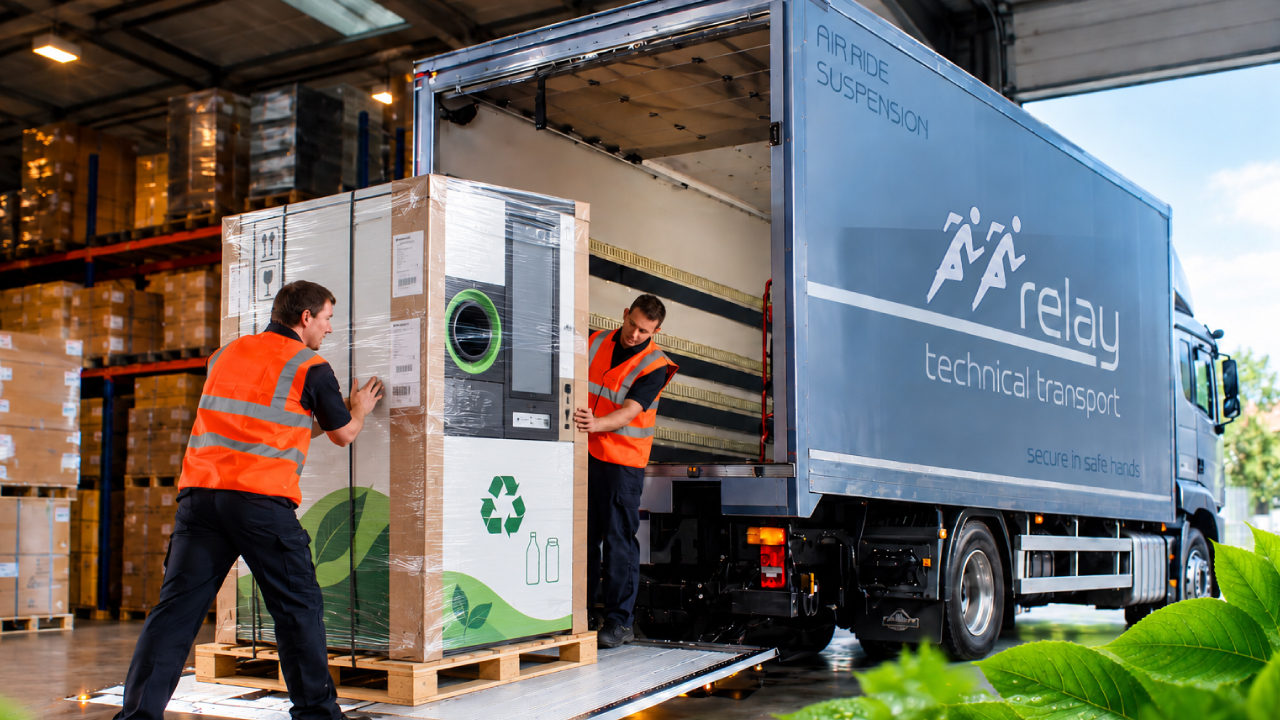
The way millions of drinks containers are collected and recycled across the UK is about to change significantly.
From October 2027, the Deposit Return Scheme (DRS) will introduce a refundable deposit on eligible single-use drinks containers. For retailers, manufacturers and their supply chain partners, preparations are already gathering pace – including planning for the installation of potentially thousands of Reverse Vending Machines across the country.
For the technical logistics sector, this represents a significant infrastructure project requiring careful coordination, specialist transportation and professional installation.
What is the Deposit Return Scheme?
Under the DRS, a 20p deposit will be added to eligible single-use drinks containers made from PET plastic, aluminium and steel, between 150ml and 3 litres. Consumers will be able to reclaim that deposit when the empty container is returned for recycling.
Supermarkets, grocery stores, convenience stores and newsagents covered by the regulations will generally be required to operate a return point unless they qualify for an exemption. Return points can be operated manually or through an automated Reverse Vending Machine (RVM).
The scale of the programme is significant. Exchange for Change, the Deposit Management Organisation delivering the scheme across England, Scotland and Northern Ireland, has already published specifications covering the standards and performance requirements expected of RVMs. Registration for producers and return point operators is also now under way.
From legislation to physical infrastructure
Much of the discussion around the scheme understandably focuses on recycling, deposits and retailers' responsibilities. However, there is another major practical challenge: getting the necessary equipment into the locations where it will be used.
Government implementation plans specifically identify the procurement and installation of Reverse Vending Machines as an important part of the rollout period leading up to autumn 2027. Retailers need to decide where return points will be located, procure the necessary equipment and, where required, reconfigure stores ready for installation.
This creates a substantial logistics exercise.
RVMs are pieces of technical retail equipment rather than conventional palletised goods. Depending on their specification and location, successful deployment can require site surveys, careful scheduling, specialist vehicles and handling equipment, controlled unloading and accurate positioning at the point of use.
Multiply those requirements across regional or nationwide retail estates and logistics becomes an important part of successful RVM deployment.
The importance of planning
Installing equipment into a live retail environment creates additional considerations.
Deliveries may need to take place within tightly controlled time windows to minimise disruption to customers and store operations. Access routes, loading areas, doorways, floor surfaces and the final position of the machine may all need to be assessed before delivery.
Where multiple sites are involved, rollout schedules also need to coordinate equipment availability, transport, store readiness and installation teams.
Identifying these requirements early can help manufacturers, RVM suppliers and retailers avoid unsuccessful deliveries, delays and unnecessary disruption.
How Relay can support RVM deployment
Relay Technical Transport has more than 50 years' experience in specialist logistics and already transports, delivers, positions and installs vending machines, retail equipment and other valuable technical equipment.
Our capabilities extend beyond transporting equipment between two locations. Relay can provide an end-to-end service encompassing planning, collection, storage, distribution, specialist transportation, delivery, offloading, positioning and installation.
Our specialist vehicle fleet and experienced technical crews are accustomed to handling bulky, fragile and high-value equipment, including deliveries into locations where access or operational requirements make conventional haulage unsuitable.
This makes Relay well placed to support RVM manufacturers, distributors, installation partners and retailers as deployment increases ahead of the October 2027 deadline.
For larger programmes, Relay's nationwide infrastructure provides another important advantage. With operational locations in Slough, Warrington and Coatbridge, we can support coordinated multi-site rollouts across the UK.
Preparing now for October 2027
The DRS may not launch until October 2027, but implementation is already progressing.
Exchange for Change has published its RVM specifications, registration has opened, industry testing is taking place and retailers are beginning to make practical decisions about how their return points will operate. Exchange for Change has also announced £60 million of grant funding intended to help up to 10,000 smaller independent retailers meet the cost of installing RVMs.
The next stage will increasingly involve turning those plans into physical infrastructure.
For organisations supplying or deploying Reverse Vending Machines, specialist logistics should therefore be considered early in the planning process.
Understanding access requirements, delivery volumes, regional distribution, storage needs, installation schedules and individual site constraints before rollout begins can significantly reduce risk later.